New Filings Suggest Fight to Own “Tendernism” May Just Be Beginning
Published: March 9, 2026
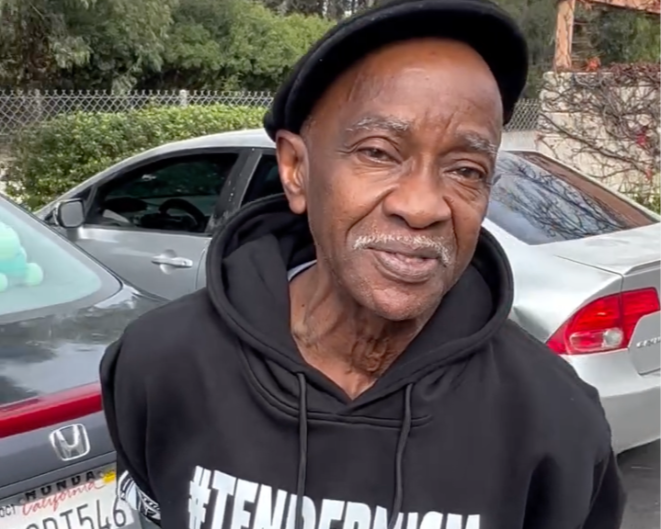
Over the past several months, the internet has rallied behind Walter Johnson, better known online as “Mr. Tendernism.”
Johnson rose to viral fame through videos filmed at Destination Smokehouse, a barbecue restaurant in Marietta, California. In the clips, Johnson enthusiastically demonstrates the restaurant’s barbecue, often pulling apart ribs while declaring they have reached “Tendernism.”
According to Johnson, Tendernism refers to meat so tender you don’t even need teeth to eat it.
The videos quickly spread across TikTok, Instagram, and YouTube. As they did, the phrase “Tendernism” became inseparable from Johnson himself.
But as the phrase went viral, something else happened.
Multiple trademark applications for TENDERNISM were filed with the United States Patent and Trademark Office (USPTO) and a battle for ownership of the mark began.
Recently, many people online have been celebrating what they believe is a major victory for Johnson after reports surfaced that an attorney who filed an earlier trademark application assigned that application to him.
But, just as it seemed like the Tendernism trademark dispute might be settling down, new developments suggest the story may be far from over.
A Potential Roadblock: The Intent-to-Use Assignment Issue
As the internet has celebrated Johnson’s “win,” one key point of trademark law has gotten overlooked. The application that was reportedly assigned to Johnson was filed as an intent-to-use trademark application.
Intent-to-use applications allow someone to reserve a filing date for a mark they intend to use in the future.
But they come with an important limitation.
Under U.S. trademark law, an intent-to-use application cannot be assigned to another party before the applicant files a Statement of Use, unless the transfer occurs as part of the sale of the underlying business associated with the mark.
The rule exists for a reason.
Trademark law does not allow people to simply “park” on trademarks the way people often park on popular domain names waiting until someone comes along willing to pay a pretty penny to own it.
Applicants must have a legitimate intention to use the mark they’ve applied for, and the law restricts transfers to prevent people from filing applications solely to hold the mark for someone else or to force someone who actually wants to use it to buy it off of them.
That rule raises an interesting question in this situation.
We know the original applications were filed by attorney Kenneth L. Harris. It appears that Harris has reportedly agreed to assign to Walter Johnson.
What remains unclear is why the applications were filed in Harris’s name in the first place.
If Harris intended to develop or use the TENDERNISM brand himself, that would be consistent with how intent-to-use applications are designed to work.
But if the applications were filed solely to hold the mark for Johnson until it could be transferred, as some reports have implied , that could potentially raise issues under the rules governing intent-to-use applications.
Without knowing the details of the arrangement, it is impossible to draw conclusions.
But it does illustrate another important truth about trademarks:
Applications alone do not determine ownership, and the path from filing to enforceable trademark rights is rarely as simple as it appears online.
New Trademark Filings Enter the Picture
While the assignment news spread online, three additional trademark filings quietly appeared at the United States Patent and Trademark Office.
On February 22, 2026, an application for MR TENDERNISM was filed by Connie Simmons of Jonesboro, Georgia covering business consulting and intellectual property licensing services.
Then, on March 8, 2026, two additional applications were filed by TreImage LLC, a branding and licensing consultancy based in Long Beach, California.
Those filings include:
TENDERNISM covering grills, barbecue equipment, and various meat and food products.
MR. TENDERNISM covering seasonings, sauces, and barbecue rubs.
All three of these filings were submitted on an intent-to-use basis and are currently awaiting examination.
Little is known of Connie Simmons.
TreImage is a marketing and licensing consultancy that has reportedly worked with well-known figures such as Soulja Boy, Ray Lewis, Royalty Brown, Warren G, Master P, and Ja Rule.
Perhaps Mr. Tendernism has now joined their roster.
Or…perhaps not.
At this stage, it is not clear whether Connie Simmons or TreImage LLC have any connection to Walter Johnson.
But even if these filings were made with Johnson’s involvement, the approach is quite curious.
None of the new applications list Johnson himself as the owner.
A detail that matters more than you think.
Trademark ownership must reflect who actually controls the brand in the marketplace. Identifying the correct owner at the time of filing is critical, because listing the wrong owner can weaken the application, create enforcement problems, and in some cases jeopardize the validity of the trademark altogether.
If the goal is for Walter Johnson to build and control the Tendernism brand, you would expect to see Johnson listed as the applicant.
Instead, the current filings list third parties as the owners, which could allude to issues down the road about who actually controls the brand and the validity of the pending applications.
There is also another wrinkle.
Because these applications were filed on an intent-to-use basis, the listed applicants must have a bona fide intent to use the mark in commerce themselves. If the applications were filed by third parties primarily to hold the mark for someone else, they could face some of the same complications that appear to be arising with the earlier Kenneth Harris application.
Whether these filings reflect a coordinated strategy involving Walter Johnson or the emergence of additional competition seeking their own stake in the mark remains to be seen.
Either way, it appears the Tendernism trademark saga may still have several chapters left to play out.
Destination Smokehouse: A Lesson in the Power of Public Opinion
While the legal questions surrounding the Tendernism trademark continue to evolve, Destination Smokehouse, one of the original parties involved in the dispute and the strongest challenger to Johnson’s rights, appears to have thrown in the towel after its public falling out with Johnson.
In applications filed in December 2025 and January 2026, Destination Smokehouse claimed it owned the trademark based on first use in April 2024.
Following a wave of backlash that erupted online, the phrase “Tendernism” appears to have largely disappeared from the restaurant’s public-facing materials. The term no longer appears on the restaurant’s website, and recent social media posts do not appear to prominently feature the phrase that once helped propel the restaurant to viral fame.
The fallout has reportedly been significant. The restaurant has lost hundreds of thousands of followers across social media platforms, and online reports suggest that customer traffic at its locations has dropped sharply as calls for boycotts spread across TikTok and other platforms.
And that highlights on of the most important lessons from the Tendernism dispute.
Sometimes the most important trademark question is not:
“Who can win the legal fight?”
But rather:
“What happens to the brand if you do?”
Trademarks exist at the intersection of law, branding, and public perception.
Here, while the company’s applications remain pending with the USPTO, in the court of public opinion, the verdict is already in.
To millions of viewers online:
Tendernism is Walter Johnson.
The phrase is inseparable from the personality who made it famous.
And that reality should serve as a warning to anyone else considering staking a claim to the mark.
Because even if the law might offer a path to claim the rights, the public has already decided who truly owns the brand, and they’re firmly in his corner.
TL;DR
The viral “Tendernism” phrase made famous by barbecue pitmaster Walter “Mr. Tendernism” Johnson has sparked a growing trademark battle. While many online believe Johnson now owns the mark after an application was reportedly assigned to him, the situation is more complicated. Questions about intent-to-use trademark assignments, new trademark filings by other parties, and the public backlash against Destination Smokehouse suggest the Tendernism trademark saga may still have several chapters left to play out.
Share this article on:
DISCLAIMER: Information on this site is provided for informational purposes only and does not constitute legal advice. No attorney–client relationship is formed unless and until a written retainer agreement is executed. The views and opinions expressed by Randi Leath in this blog are her own. This blog is not affiliated with, endorsed by, or sponsored by Chartwell. See full disclaimer