

Trademark
& IP Blog
Practical insights on trademarks, licensing, enforcement, and brand strategy for growing businesses and creators.
Published by Randi Leath, Esq.
Caleb Williams Moves to Trademark “ICEMAN” — But the Field Is Getting Crowded
Caleb Williams is making a strong branding move with “ICEMAN,” but things may be heating up fast. With Chuck Liddell filing first and George Gervin claiming decades of use, the race for trademark rights is anything but cold.
Published: March 23, 2026
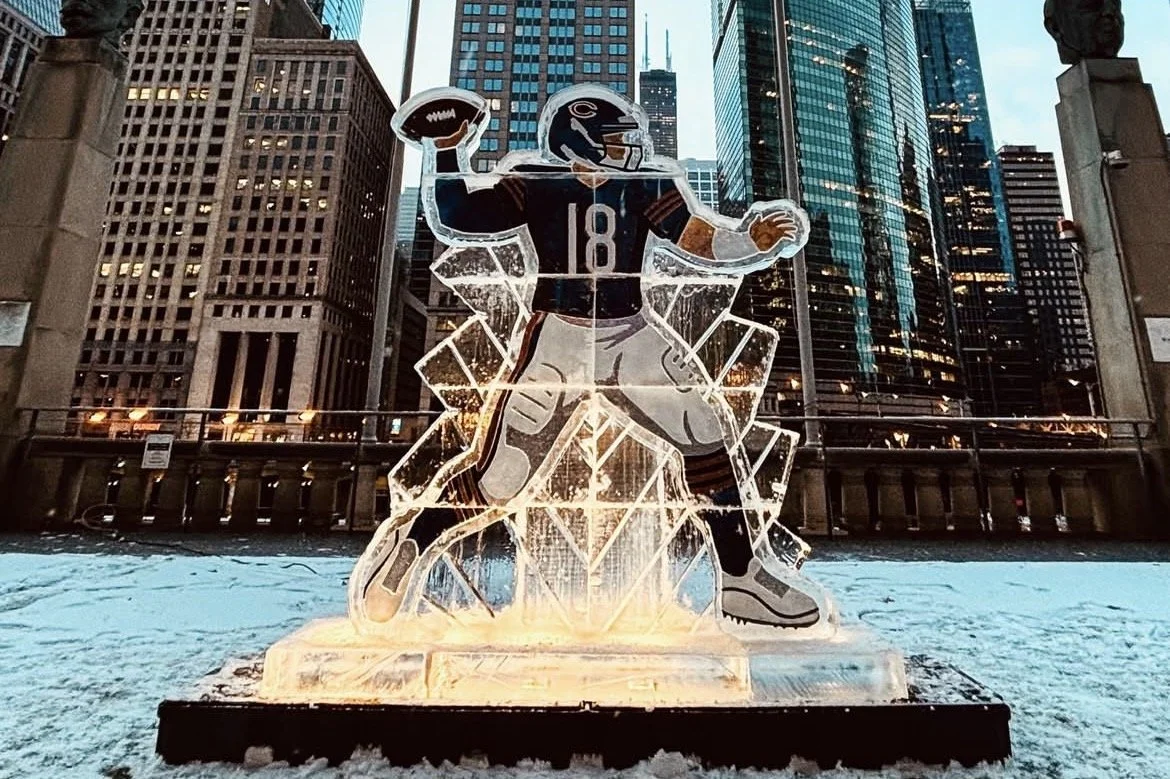
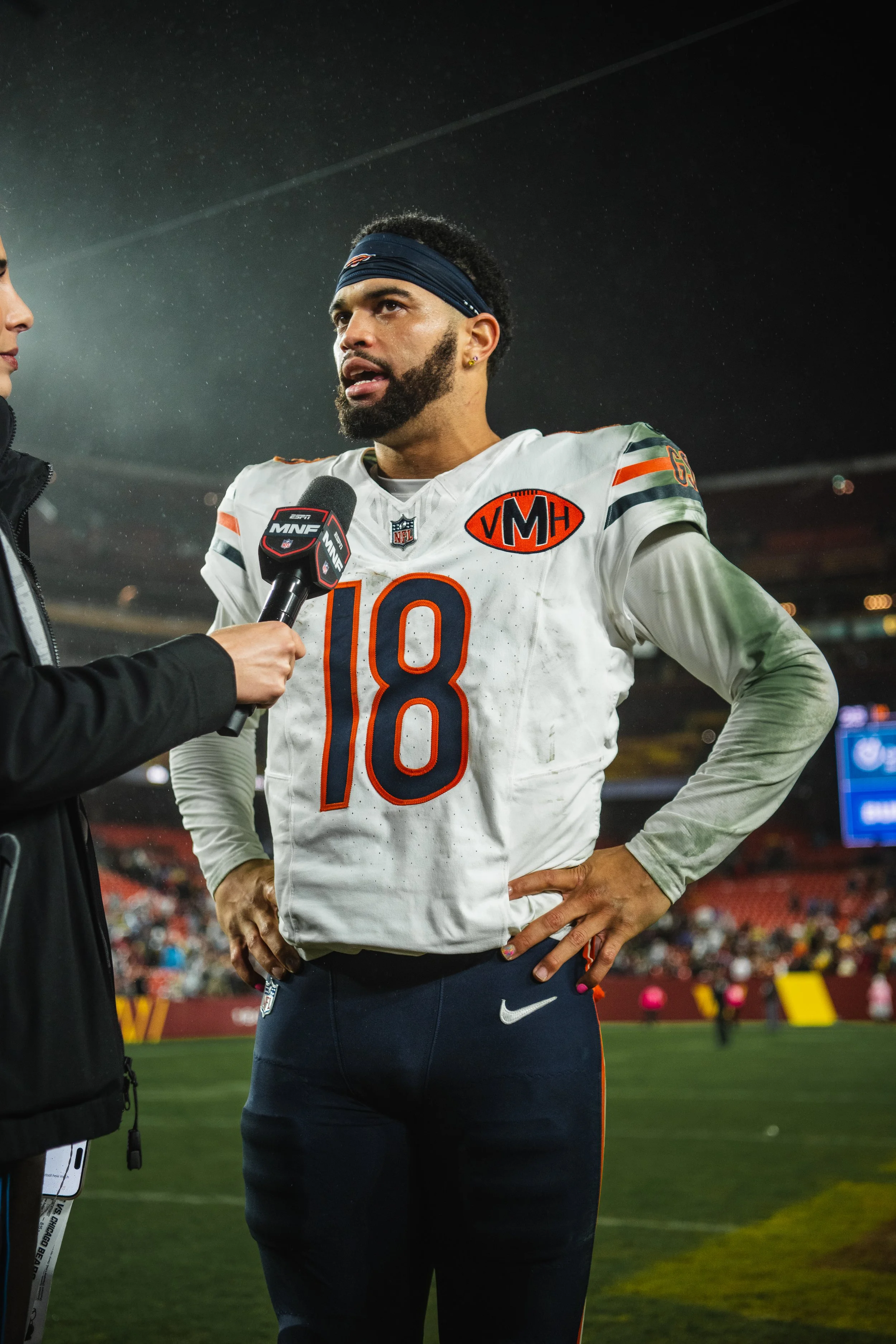
Chicago Bears quarterback Caleb Williams, the No. 1 overall pick in the 2024 NFL Draft and one of the league’s most marketable young players, is the latest athlete to take a proactive approach to brand protection. On March 16, 2026, Williams filed two trademark applications for the moniker ICEMAN, a nickname increasingly associated with his on-field composure and late-game performance.
The filings reflect a broader trend among professional athletes seeking to secure rights in nicknames tied to identity and commercial appeal.
While many are applauding the power play, competition around “ICEMAN” may be heating up.
Williams’ Filings: Broad, But Intent-to-Use
Williams’ applications (filed by Caleb Williams Holdings, Inc.) cover both a standard character mark and a stylized version of ICEMAN. Both are filed on an intent-to-use (ITU) basis, meaning Williams has not yet claimed use of the mark in commerce.
The scope of the filings is expansive and reflects a typical athlete-driven brand strategy.
The inclusion of Class 025 (apparel) and Class 041 (entertainment services) signals an intent to commercialize the nickname across both merchandise and media platforms.
ICEMAN – Caleb Williams Applications
| Class | Goods / Services |
|---|---|
|
009
|
Eyewear; sunglasses; downloadable posters; downloadable software featuring digital trading cards |
| 018 | Athletic bags; backpacks; tote bags; luggage |
| 025 | Water bottles; sports bottles; mugs |
| 021 | Apparel (shirts, sweatshirts, hats, jerseys, jackets, vests) |
| 028 | Sporting goods (footballs; balls for games) |
| 041 | Entertainment services (personal appearances; football-related programming; events; multimedia content) |
Prior Pending Applications: Chuck “The Iceman” Liddell
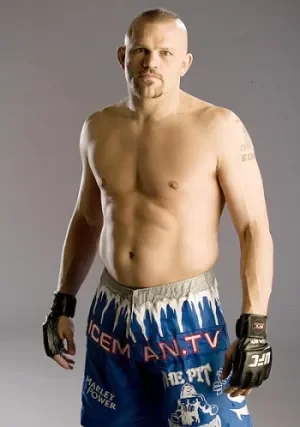
Williams, however, is not the first athlete to seek federal protection tied to the “ICEMAN” name. Chuck Liddell, a UFC Hall of Famer and one of the most recognizable figures in mixed martial arts during the sport’s early mainstream rise, has long been associated with the nickname “The Iceman.”
Liddell has two earlier-filed applications for CHUCK “THE ICEMAN” LIDDELL, filed in. April 2022, both still pending and filed on an intent-to-use basis.
One of Liddell’s applications overlaps directly with Williams’ filings in Class 025 apparel, and somewhat with the Class 028 sporting goods creating a potential point of conflict.
CHUCK “THE ICEMAN” LIDDELL – Applications
| Class | Goods / Services |
|---|---|
|
032
|
Beer; energy drinks |
| 033 | Alcoholic beverages (excluding beer) |
| 025 | Apparel (shirts, pants, hats, jackets, etc.) |
| 028 | MMA and boxing equipment; fitness gear |
Liddell’s Clock Is Ticking
Liddell’s applications are not only earlier-filed, but they are also deep into the post–Notice of Allowance phase, with repeated extensions of time to file a Statement of Use:
Serial No. 97375439: 5th extension granted
Serial No. 97375417: 4th extension granted, with a 5th extension request filed in February 2026 and currently pending
Under USPTO rules, applicants have a limited window—generally up to 36 months from the Notice of Allowance—to begin use of the mark and submit proof.
This creates an important dynamic:
Liddell’s earlier filing date gives him priority over Williams in an ITU-versus-ITU analysis
But his applications are approaching the last round of the allowable extension period
If Liddell timely submits a Statement of Use, his position strengthens significantly. If not, his applications could abandon, removing a key obstacle for Williams. In that sense, Liddell’s filings act as both a procedural roadblock and a potentially temporary one.
A New Entrant with Old Rights: George “The Iceman” Gervin
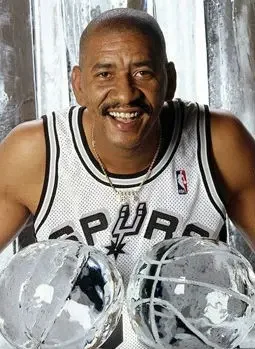
The landscape shifted further just days after Williams filed. NBA legend, George Gervin, an NBA Hall of Famer and four-time scoring champion best known for his time with the San Antonio Spurs, has been widely known as “The Iceman” for decades due to his smooth playing style and icy composure.
On March 20, 2026, Gervin filed two of his own ICEMAN applications:
ICEMAN: Serial No.99715702
ICEMAN 44: Serial No. 99715714
Gervin asserts use of the ICEMAN mark as a part of his entertainment services dating back to 1980 and an intention to use the ICEMAN and ICEMAN 44 marks in connection with clothing and apparel.
Gervin’s long-standing association with the nickname and decades of claimed use may give him a strong claim to priority, particularly in entertainment-related services.
ICEMAN – George Gervin Applications
| Class | Goods / Services |
|---|---|
| 025 | Apparel (shirts, hats, jackets, shoes, etc.) – intent-to-use |
| 041 | Entertainment services (appearances, basketball events, training, media content) – use in commerce (since 1980) |
Timing Matters: A Procedural Chessboard
The filing sequence may shape how these applications move through the USPTO.
Although Gervin may ultimately have the strongest substantive priority based on use, his application was filed last. As a result, it will likely be examined after the Williams and Liddell applications. If the examining attorney identifies a likelihood of confusion with those earlier-filed applications, Gervin’s application may be suspended pending their resolution.
At the same time:
Williams’ applications may be suspended pending Liddell’s earlier-filed applications
Liddell’s applications, in turn, may never mature if use is not established
This creates a potential chain of suspensions where:
The earliest filer (Liddell) holds procedural priority but faces timing pressure
The middle filer (Williams) is blocked by earlier filings
The latest filer (Gervin) may have the strongest rights but must wait his turn procedurally
Key Issues: Priority, Overlap, and Likelihood of Confusion
With three sets of applications now pending, several trademark principles come into play.
Priority Will Likely Turn on Use, Not Filing
Williams: intent-to-use only
Liddell: intent-to-use only
Gervin: claimed use since 1980 (Class 041)
If Gervin substantiates his use, he likely holds priority rights in entertainment services, which could present a barrier to Williams’ Class 041 application regardless of Williams’ earlier filing date.
Apparel Is a Crowded but Critical Battleground
All three parties seek rights in Class 025 apparel, a category where:
Consumer confusion risk is typically higher
Coexistence is sometimes possible, depending on branding and channels of trade
Even so, identical or highly similar marks—particularly ICEMAN—on overlapping goods may invite refusals or oppositions.
Dominant Term Overlap
Although Liddell’s mark includes his full name, the shared dominant term “ICEMAN” remains central to the analysis. The USPTO and TTAB often focus on the dominant portion of a mark, especially where consumers may shorten or emphasize that portion in practice.
Strength of Nickname-Based Rights
Gervin’s decades-long nickname recognition raises additional considerations:
Potential common law rights predating all applications
A broader zone of protection in sports and entertainment contexts
This could make Gervin a particularly strong opponent in any opposition proceeding.
What to Watch
As these applications move forward:
The USPTO may issue likelihood-of-confusion refusals between the pending marks
Any of the parties may initiate opposition proceedings once marks are published
The outcome may ultimately depend on evidence of use and marketplace recognition, not just filing dates
For Williams, the filings represent a strategic effort to lock down a marketable identity early. But in a space where multiple high-profile athletes lay claim to the same nickname, securing exclusive rights may prove more complex than the initial filings suggest.
TL;DR:
Chicago Bears star quarterback, Caleb Williams is staking a claim to “ICEMAN” nickname in two new Intent-to-Use trademark applications, but with earlier trademark filings by MMA great Chuck Liddell and a later-filed, use-based application from NBA Hall of Famer George Gervin, their just may be a battle to own ICEMAN trademark rights heating up.
Share this article on:
DISCLAIMER: Information on this site is provided for informational purposes only and does not constitute legal advice. No attorney–client relationship is formed unless and until a written retainer agreement is executed. The views and opinions expressed by Randi Leath in this blog are her own. This blog is not affiliated with, endorsed by, or sponsored by Chartwell. See full disclaimer


New Filings Suggest Fight to Own “Tendernism” May Just Be Beginning
The internet may think the Tendernism trademark fight is over, but the legal reality is more complicated. New trademark filings, assignment issues, and the fallout involving Destination Smokehouse suggest the dispute over who owns the mark is still unfolding.
Published: March 9, 2026
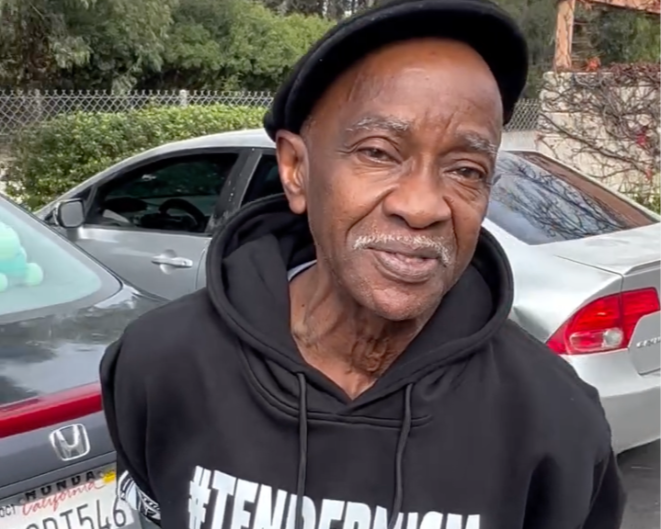
Over the past several months, the internet has rallied behind Walter Johnson, better known online as “Mr. Tendernism.”
Johnson rose to viral fame through videos filmed at Destination Smokehouse, a barbecue restaurant in Marietta, California. In the clips, Johnson enthusiastically demonstrates the restaurant’s barbecue, often pulling apart ribs while declaring they have reached “Tendernism.”
According to Johnson, Tendernism refers to meat so tender you don’t even need teeth to eat it.
The videos quickly spread across TikTok, Instagram, and YouTube. As they did, the phrase “Tendernism” became inseparable from Johnson himself.
But as the phrase went viral, something else happened.
Multiple trademark applications for TENDERNISM were filed with the United States Patent and Trademark Office (USPTO) and a battle for ownership of the mark began.
Recently, many people online have been celebrating what they believe is a major victory for Johnson after reports surfaced that an attorney who filed an earlier trademark application assigned that application to him.
But, just as it seemed like the Tendernism trademark dispute might be settling down, new developments suggest the story may be far from over.
A Potential Roadblock: The Intent-to-Use Assignment Issue
As the internet has celebrated Johnson’s “win,” one key point of trademark law has gotten overlooked. The application that was reportedly assigned to Johnson was filed as an intent-to-use trademark application.
Intent-to-use applications allow someone to reserve a filing date for a mark they intend to use in the future.
But they come with an important limitation.
Under U.S. trademark law, an intent-to-use application cannot be assigned to another party before the applicant files a Statement of Use, unless the transfer occurs as part of the sale of the underlying business associated with the mark.
The rule exists for a reason.
Trademark law does not allow people to simply “park” on trademarks the way people often park on popular domain names waiting until someone comes along willing to pay a pretty penny to own it.
Applicants must have a legitimate intention to use the mark they’ve applied for, and the law restricts transfers to prevent people from filing applications solely to hold the mark for someone else or to force someone who actually wants to use it to buy it off of them.
That rule raises an interesting question in this situation.
We know the original applications were filed by attorney Kenneth L. Harris. It appears that Harris has reportedly agreed to assign to Walter Johnson.
What remains unclear is why the applications were filed in Harris’s name in the first place.
If Harris intended to develop or use the TENDERNISM brand himself, that would be consistent with how intent-to-use applications are designed to work.
But if the applications were filed solely to hold the mark for Johnson until it could be transferred, as some reports have implied , that could potentially raise issues under the rules governing intent-to-use applications.
Without knowing the details of the arrangement, it is impossible to draw conclusions.
But it does illustrate another important truth about trademarks:
Applications alone do not determine ownership, and the path from filing to enforceable trademark rights is rarely as simple as it appears online.
New Trademark Filings Enter the Picture
While the assignment news spread online, three additional trademark filings quietly appeared at the United States Patent and Trademark Office.
On February 22, 2026, an application for MR TENDERNISM was filed by Connie Simmons of Jonesboro, Georgia covering business consulting and intellectual property licensing services.
Then, on March 8, 2026, two additional applications were filed by TreImage LLC, a branding and licensing consultancy based in Long Beach, California.
Those filings include:
TENDERNISM covering grills, barbecue equipment, and various meat and food products.
MR. TENDERNISM covering seasonings, sauces, and barbecue rubs.
All three of these filings were submitted on an intent-to-use basis and are currently awaiting examination.
Little is known of Connie Simmons.
TreImage is a marketing and licensing consultancy that has reportedly worked with well-known figures such as Soulja Boy, Ray Lewis, Royalty Brown, Warren G, Master P, and Ja Rule.
Perhaps Mr. Tendernism has now joined their roster.
Or…perhaps not.
At this stage, it is not clear whether Connie Simmons or TreImage LLC have any connection to Walter Johnson.
But even if these filings were made with Johnson’s involvement, the approach is quite curious.
None of the new applications list Johnson himself as the owner.
A detail that matters more than you think.
Trademark ownership must reflect who actually controls the brand in the marketplace. Identifying the correct owner at the time of filing is critical, because listing the wrong owner can weaken the application, create enforcement problems, and in some cases jeopardize the validity of the trademark altogether.
If the goal is for Walter Johnson to build and control the Tendernism brand, you would expect to see Johnson listed as the applicant.
Instead, the current filings list third parties as the owners, which could allude to issues down the road about who actually controls the brand and the validity of the pending applications.
There is also another wrinkle.
Because these applications were filed on an intent-to-use basis, the listed applicants must have a bona fide intent to use the mark in commerce themselves. If the applications were filed by third parties primarily to hold the mark for someone else, they could face some of the same complications that appear to be arising with the earlier Kenneth Harris application.
Whether these filings reflect a coordinated strategy involving Walter Johnson or the emergence of additional competition seeking their own stake in the mark remains to be seen.
Either way, it appears the Tendernism trademark saga may still have several chapters left to play out.
Destination Smokehouse: A Lesson in the Power of Public Opinion
While the legal questions surrounding the Tendernism trademark continue to evolve, Destination Smokehouse, one of the original parties involved in the dispute and the strongest challenger to Johnson’s rights, appears to have thrown in the towel after its public falling out with Johnson.
In applications filed in December 2025 and January 2026, Destination Smokehouse claimed it owned the trademark based on first use in April 2024.
Following a wave of backlash that erupted online, the phrase “Tendernism” appears to have largely disappeared from the restaurant’s public-facing materials. The term no longer appears on the restaurant’s website, and recent social media posts do not appear to prominently feature the phrase that once helped propel the restaurant to viral fame.
The fallout has reportedly been significant. The restaurant has lost hundreds of thousands of followers across social media platforms, and online reports suggest that customer traffic at its locations has dropped sharply as calls for boycotts spread across TikTok and other platforms.
And that highlights on of the most important lessons from the Tendernism dispute.
Sometimes the most important trademark question is not:
“Who can win the legal fight?”
But rather:
“What happens to the brand if you do?”
Trademarks exist at the intersection of law, branding, and public perception.
Here, while the company’s applications remain pending with the USPTO, in the court of public opinion, the verdict is already in.
To millions of viewers online:
Tendernism is Walter Johnson.
The phrase is inseparable from the personality who made it famous.
And that reality should serve as a warning to anyone else considering staking a claim to the mark.
Because even if the law might offer a path to claim the rights, the public has already decided who truly owns the brand, and they’re firmly in his corner.
TL;DR
The viral “Tendernism” phrase made famous by barbecue pitmaster Walter “Mr. Tendernism” Johnson has sparked a growing trademark battle. While many online believe Johnson now owns the mark after an application was reportedly assigned to him, the situation is more complicated. Questions about intent-to-use trademark assignments, new trademark filings by other parties, and the public backlash against Destination Smokehouse suggest the Tendernism trademark saga may still have several chapters left to play out.
Share this article on:
DISCLAIMER: Information on this site is provided for informational purposes only and does not constitute legal advice. No attorney–client relationship is formed unless and until a written retainer agreement is executed. The views and opinions expressed by Randi Leath in this blog are her own. This blog is not affiliated with, endorsed by, or sponsored by Chartwell. See full disclaimer

First Use is written by Randi Leath, a trademark and intellectual property attorney who advises businesses, entrepreneurs, and creatives on on building, protecting, and using their brands.
Her practice focuses on trademarks, licensing, enforcement, and brand strategy, with an emphasis on providing practical, business-minded guidance tailored to each client’s goals.